
Battle Ground Public Schools’ board of directors recently adopted the district’s budget for the 2026-27 school year. This year’s budget reflects the loss of local levy funding, higher operating costs and state funding that falls below the cost of educating 13,000 students. The district expects about $213 million in revenue and about $227 million in expenses. This leaves a gap of about $14 million in addition to $20 million in budget cuts that the district made in spring 2026. The district plans to use part of its fund balance, or savings, to cover that gap for one year. Use of the fund balance for routine operational expenses is not sustainable and will worsen the district’s financial health.
Watch the full budget hearing presentation and/or see the slides.
Where the money comes from and where it goes
The district expects to receive about $213 million for the 2026-27 year. Most of the money in this year’s budget–about 91%–comes from the state. However, state funding is not keeping up with actual operational costs. For example, the cost of fuel for school buses increased 39.4%. Insurance went up 8%. Meanwhile, the state has cut funding for student transportation, early learning, Running Start and other areas.
A local educational programs and operations levy, formerly 13% of the district’s budget, is not a part of the current budget. As a result of not having a levy and relying on savings/fund balance, the district also will lose access to an estimated $1 million from timber sales, interest on the fund balance and serving students who live in areas without a high school.
The district’s costs for the year are projected to be around $227 million–even after cutting 137 staff positions for the year, reducing classes and programs and implementing furlough days for many staff groups.
Approximately 90% of the budget will go directly toward students and school operations. More than 71% goes to teaching activities and teaching support, while 19% is spent on student transportation, building maintenance and grounds, utilities and other forms of support.
Use of district savings
The district expects to end the 2026–27 school year with about $11.7 million remaining in its fund balance (one-time money). If this projection is accurate, the remaining savings would be below the goal amount set in board policy. It would represent a significant decrease in savings since 2020.
Financial outlook
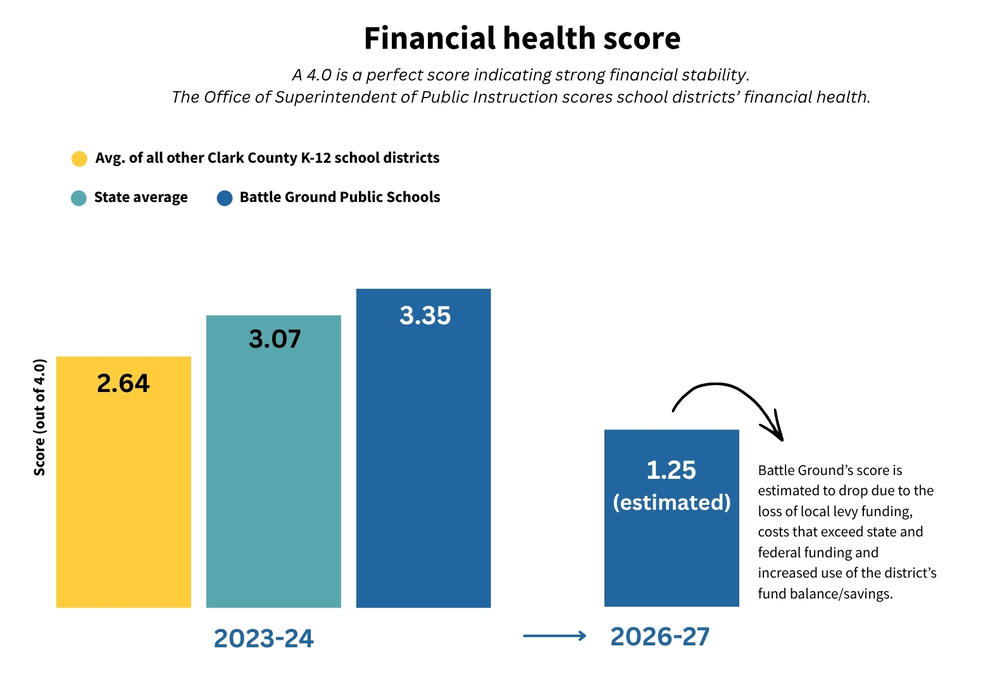
The district’s projected financial health score is expected to drop from 3.35 out of 4 to 1.25 out of 4 by the end of the 2026-27 school year. A lower score means less financial stability, placing the district within the state's financial warning range.
As a school district’s financial condition worsens, state control increases. Local school districts lose the ability to make financial decisions that affect students.
Without additional funding for 2027, the district expects the financial pressure to continue.
BGPS would need to make another $13 million to $15 million in reductions to student programs for 2027–28.
If funding is received, the district could begin restoring some student programs.
Monitoring district finances
The district continues to monitor its finances throughout the year. Staff review monthly budget and enrollment reports, track changes in state funding and conduct internal audits. The district also has monthly audit committee meetings with elected board members from the community, and it receives independent audits from the Washington state auditor. See the latest audit results.
Related: